A fine Supermoon this month

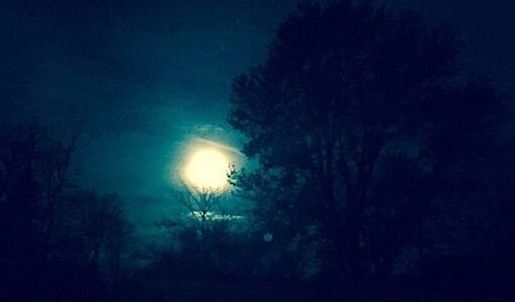
Best Superrmoon this year is early November Jacobs photo)
Good Supermoon  early November Jacobs photo)


Oldsters might recall the words “by the light of the silvery moon.” That light is shining bright now.

November’s Full Moon is most illuminated at 8:19 a.m. EST on November 5, 2025 but it already appears full tonight, Nov. 4, so don’t worry you don’t see it early in the morning. Just look up tonight to see what we call the Hunter’s Moon or the Beaver’s Moon.

Whatever name you like it is a Supermoon and is brightest and fullest on Nov. 5, 2025. It appears larger than most other full moons because it will be closer to Earth.

But look again. It will still look full on Nov. 6.

Check the Moonrise and Moonset Calculator at the Old Farmer’s Almanac.

According to the Farmer’s Almanac a Supermoon is a New or Full Moon that occurs when the Moon is near perigee (the point in the Moon’s orbit where it is closest to Earth). Thus there can be more than one Supermoon in a year.

“Supermoon” was the name given by astrologer Richard Nolle in 1979 for Moons within 90% of perigee. 

The almanac goes on to say “According to this definition, in 2025, the Full Moons of October, November, and December all qualify as Supermoons—reaching 90% of perigee, the Moon’s closest approach to Earth.

Next year, 2026, will contain three Full Supermoons – January 3, 2026; November 24, 2026; and December 23, 2026.


Look up for new comet discoveries and our October prime time meteor shower

Meteor shower (Photo courtesy of NASA)

That light that usually hangs up in the sky is entering its new moon stage so it won’t be a problem when watching the Orionid meteors at their peak Oct. 21 or when looking for the recently discovered comets R2 SWAN crossing the sky tonight (visit Time and Date) or A6 Lemmon tomorrow.

The Orionid meteor shower, active from Oct. 2 to Nov. 7, peaks Oct. 21. As you may recall from other articles this meteor shower occurs when Earth travels through the debris behind Halley’s Comet

What to expect: Fast, bright meteors, about 20 per hour, coming from the constellation Orion, near the star Betelgeuse.

When: Best is to watch for them at predawn because the radiant is then high in the sky. It would have risen in the east before midnight so expect the best action about 5:30 a.m.

Find more info and watch time about the two newly found comets at Space.com.

Harvest Moon


First Supermoon this year is early October Jacobs photo)


Did the full moon wake you last night as it shone through the window covering? It did me.

The October 2025 full moon actually is 11:47  p.m. ET, Oct 6, but it will look large and full this weekend thru Oct.8 because it is a Supermoon.

It appears larger and brighter because it is closer to Earth than this year’s previous full moons. It is the first of three Supermoons in 2025.

It is also called the Harvest Moon which sometimes appears in September depending on when the autumnal equinox falls.

If you are driving past a field that is no longer full of corn you likely understand why the October full moon this year is called the Harvest Moon.

But sometimes we think of the Harvest Moon as falling in September. That “date” depends on the September (autumnal equinox) which this year was Sept. 22. The full moon closest to the autumnal equinox is called the Harvest Moon. This year we called the September full moon the Corn Moon.

BTW the Anishinaabe tribe calls the October Moon the Falling Leaves Moon.

Maybe you noticed evening started to come earlier after Sept. 22. Our daylight is shortening and our yard is covered with leaves.

More information at Time and Date and at Old Farmer’s Almanac

September full moon is a triple treat

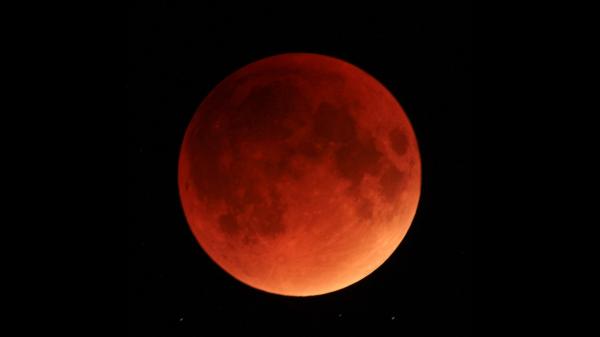
A bright red Moon during a total lunar eclipse against a black night sky.

Photo courtesy of Time and Date

For many folks September marks the beginning of the 2025-26 school year but for Full Moon Sky Watchers it is a lot more:

The September full moon is called the Corn Moon.

The September 2025 full moon is the Blood Moon.

The September 2025 full moon includes an eclipse.

The Moon always appears full in the days before and after peak illumination. Full Moon is the only phase where the Moon is up all night, with moonrise and moonset occurring around sunset and sunrise.

Regular readers of this site know that full moons usually are named for their season or their crops so there’s little surprise that the September’s full moon is often called the Corn Moon to indicate when the crop is harvested.

In the US its peak illumination will be at 2:09 p.m. Eastern Time, September 7-8. However, because that will be below the horizon watch for it after sunset.

However, the September 2025 full moon is also a Blood Moon. And yes, that is what some people, mostly in Europe, Australia Asia and Africa will see because some of its time in the sky it will appear red.

A fully eclipsed Moon is called a Blood Moon  which will happen Sept. 8 when the Moon passes through Earth’s shadow as a  lunar eclipse. It will  be covered by the darkest part of Earth’s shadow. The full eclipse will last for about an hour and  22 minutes.

For more information visit:

Total lunar eclipse September 2025: All you need to know – Space & Telescope

LIVE Stream: Total Lunar Eclipse September 7–8, 2025

NASA Blood Moon – Search Newslivestreams (video)

Black Moon this weekend


Forget about looking up for this sky happening

You have heard the phrase”Blue Moon” referring to a rare occasion. But what about a “Black Moon?”

Blue Moon is usually applied to the second full moon in a month but also the second new moon in a month. However, the second new moon in a season can also be termed  a Black Moon.

What about the third new moon?

When we have a new moon this weekend – Friday/Saturday, it can be called a Black Moon. It is the third new moon in the astronomical season between the June solstice and the September equinox.

Astronomical seasons are based on the solstices and equinoxes. But  meteorological seasons refer to the temperature cycles of fall, winter, spring and summer.

Jodie Jacobs

For more information visit Rare Black Moon coming August 22-23! Why so special? and What Is a Black Moon? The Unusual Sky Phenomenon Will Occur Later This Month, but Don’t Expect to See It

What and where of Chicago Air and Water Show


U.S. Air Force Thunderbirds (Photo credit Patrick L. Pyszka, City of Chicago)

US Thunderbirds (Photo courtesy of City of Chicago)


Chicago’s famed Air and Water Show is this weekend but you don’t have to wait until Saturday to see its highlights. Just head to the North Avenue Beach on Friday. Bring plenty of sun tan lotion and drinking water because the flyovers will be happening all day.

The show actually can be seen from Fullerton Avenue on the north to Oak Street on the south but North Avenue is the center of the action.

However, if you want to go when thousands of others head to North Avenue, the show runs from 10:30 a.m. to 3 p.m. Saturday and Sunday. If similar to past years the U. S. Thunderbirds will fly overhead near the end both says. But watch for them earlier on Friday.

The Air and Water Show, first started in 1959, is free. This year it will again feature the U.S. Army Parachute Team Golden Knights and U.S. Air Force Thunderbirds.

It will also pay tribute to the 250th anniversary of the United States Army and United States Marine Corps. However, the U.S. Navy will not be participating.

The Warbird Thunder Airshows part of the event includes the SNJ-2 and SNJ-3, a World War II-era aircraft once used by the U.S. Navy and Marine. Watch for “Ol Growler” leading a routine of loops, rolls and Cuban Eights.

In addition to military performers are the following Civilian Performers and groups.

The Warbird Thunder Airshows part of the event includes the SNJ-2 and SNJ-3, a World War II-era aircraft once used by the U.S. Navy and Marine. Watch for “Ol Growler” leading a routine of loops, rolls and Cuban Eights.

The show also features:

  • Bill Stein Airshows
  • Coleman Aerosports – Kevin Coleman
  • Folds of Honor Biplane – Ed Hamill
  • Mini Jet Airshows – Tom Larkin
  • Muscle Biplane Machaira – Bob Richards
  • Super Stearman “Big Red” – Susan Dacy

For more information visit City of Chicago :: Chicago Air and Water Show

Have fun

Jodie Jacobs


Look up to watch the Perseids


Meteor shower (Photo courtesy of NASA)

The Perseids meteor shower, among the best sky shows of the year at about 100 meteors per hour, already started in mid-July and continues to Aug. 24 but peaks Aug. 11–13.

However, because the full August moon known as the Sturgeon Moon (see Sturgeon moon – Travel Smart With Jodie) is now lighting up the heavens it may be hard to see all the meteors shooting across the sky. (Time and Date has a Meteor Shower Sky Map for different  locations).

What is it?

The Perseids are named after the constellation Perseus because they seem to emanate from or near (radiant) it.  They are space debris from the comet 109P Swift-Tuttle discovered in 1862, according to NASA.

The Earth passes through the Swift-Tuttle trail as it goes around the sun. When the debris enters our atmosphere, it burns up, creating fiery streaks.

Where?

Best is the Northern Hemisphere where the constellation is visible all year. 

For more information visit space.com/perseus-constellation.html and NASA

Where?

Best is the Northern Hemisphere where the constellation is visible all year even though the Perseids show up most in August.

For more information visit space.com/perseus-constellation.html and NASA

Sturgeon moon

Full moon (J Jacobs photo)

You can call the August Full Moon the Corn Moon as the Algonquin and Ojibwe tribes have done or the Harvest Moon as called by the Dakotas, but  it is tradionally named the Sturgeon Moon after a large fish found in the Great Lakes (also Lake Champlain) that is most often caught at this time of year.

Whatever you want to call the full Moon this month look for it Aug. 9, 2025, when it will be at peak illumination at 3:55 a.m. Eastern Time. However, it will definitely look full Aug. 8-10.

I saw what the sturgeon looks like when visiting the popular Grand Rapids Public Museum in Michigan. Sturgeons really are ugly and do look prehistoric so it’s easy to believe they are, as scientists say,  descended from fish that date to the Early Jurasic period.

They have a heterocercal caudal fin like sharks on an elongated smooth body with lateral scutes (plates).

Less ferocious August Full Moon names are Flying Up Moon (Cree)  and   Black Cherries Moon (Assiniboine) for when chokecherries become ripe. Also, The Tlingit of the Pacific Northwest traditionally call the season of the Mountain Shadows Moon.


Buck Moon


Full moon (J Jacobs photo)

Begin watching the moon “grow” and glow. It is already peaking into southeastern corner bedrooms. Travel Smart readers are familiar with this advance Moon movement but it is always good to remember that the Full Moon, the shining orb is out all night

The July Full Moon phase reaches full illumination July 10, 2025, at 20:36 UTC (4:37 p.m. Eastern Time) when it will still be below the horizon. So Moonrise and Moonset are at sunset and sunrise. Check out these Skywatching Tips From NASA.

What the July Full moon is called

As with several other full moon names, the July Full Moon, often called the Buck Moon, refers to animal and plant behavior.  “Buck” is for the full-growth of male deer antlers. But the July Moon is also known as the Berry Moon ( Anishinaabe and Dakota), and Raspberry Moon (Algonquin, Ojibwe).

Other names include Feather Moulting Moon (Cree) and Salmon Moon, a Tlingit term indicating when fish returned to the area.

Also find interesting information at July full moon 2025: The Buck Moon joins Mars and Saturn | Space and  NASA SVS | Moon Phase and Libration, 2025

Terrific photo exhibit


Photograph by Randy Olson  The photographer captured this electric storm while photographing sandhill cranes at Platte River, Nebraska in 2016. He shot a series of 30-second exposures through the night, hoping lightning would strike during one. The result: a dramatic and rare view of these iconic birds.

Of course you would expect to see rabbits, deer and squirrels at a Lake County Forest Preserve (LCFP). But how about elephants, lions and tigers?

Check out the close encounters of wild life as perfectly captured by the lens of some of the world’s top photographers. The photo exhibit went up May 24 at the LCFP’s Dunn Museum in Libertyville.

Jodie Jacobs